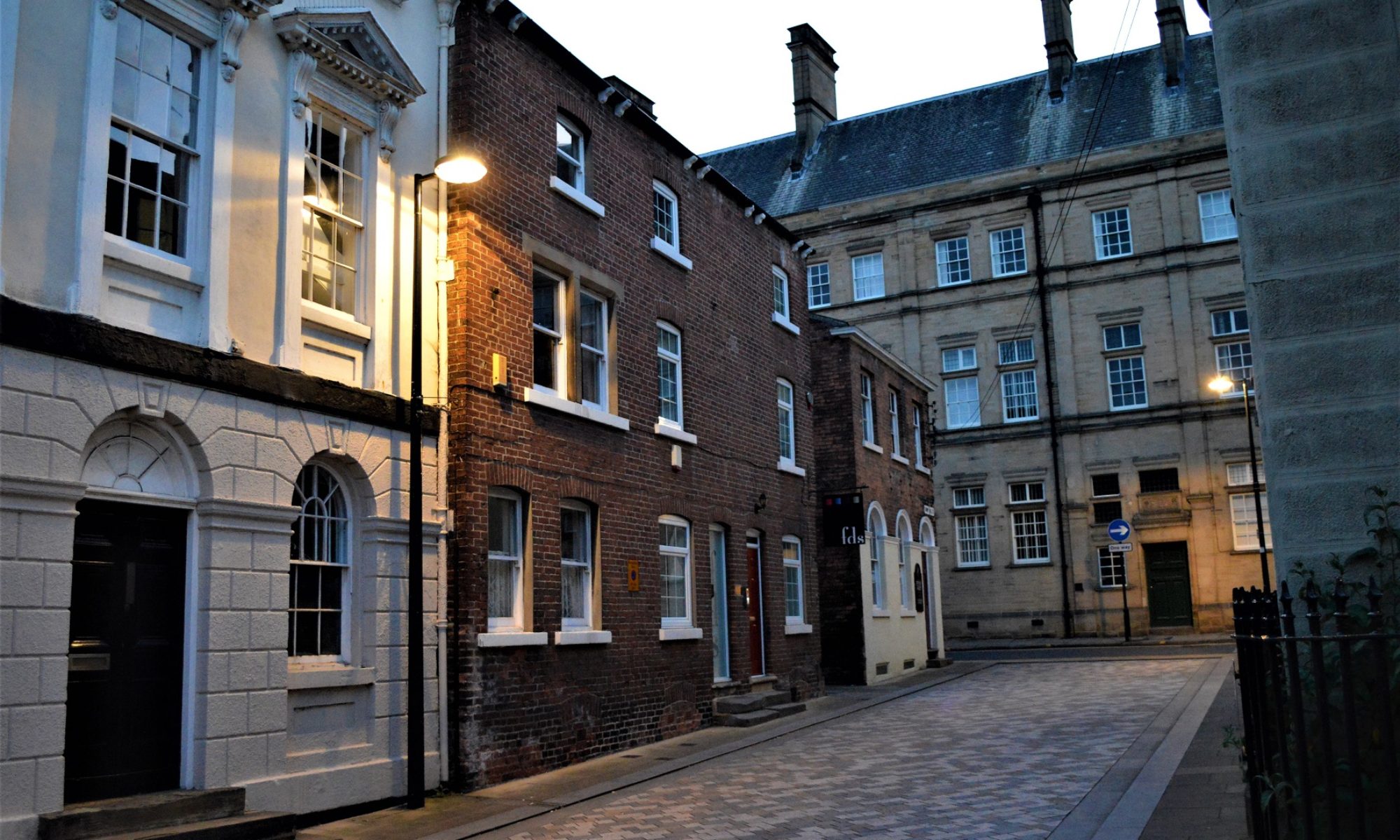
The Society has offered support for the draft city centre Masterplan published by Wakefield Council in October 2021.
In a letter to the Council dated 5th November 2021, the Society said:
This is Wakefield: Re-Imagining the City Centre; the Wakefield Masterplan
The Executive Committee of Wakefield Civic Society has discussed the proposed Masterplan in detail. Members are very much in support of its principles. The Society also supports the way in which the plan has been prepared, with extensive use of online and in-person methods of consultation and with very clear visual presentations and maps.
There is much in the Masterplan that we like and the content chimes very well with our own vision of what we think should happen in the city centre over the coming years. The Masterplan recognises that the future cannot be premised solely on a reliance on retail to attract visitors and business investment into the city.
In specifying an alternative to retail, the Masterplan declares a vision ‘to provide a balanced mixed offer and a people-focused environment where work, live, create, experience and access are interlinked to enable a distinctive and vibrant environment.’ The Society fully endorses that vision. In addition, the Society endorses the proposals for ‘green and blue’ areas, for movement, heritage and culture and adaptability.
Given the complexity of the proposals there are aspects where the Society has detailed reservations or where the proposals could still be improved – for example:
- We suspect that, at least for the time being given the recent experience of home working during the Covid pandemic, the potential for commercial office development will be limited. While office development is not a major theme in the Masterplan, and proposals to offer flexible spaces for co-working and incubator spaces are very welcome, we think a cautious approach will be required to the provision of ‘traditional’ office space.
- Some proposed green and residential areas, adjacent to the ‘Emerald Ring’, including the ‘King Project’ area, suffer from traffic noise that will require local mitigation.
- Kirkgate Station remains rather isolated and would benefit from the provision of direct pedestrian access via Calder Vale Road and a more direct route to the Hepworth and Tileyard North which gives greater priority to pedestrians that the current arrangement.
The plan envisages a major change for the City Centre and will almost certainly cause some local disruption in its implementation. We have a number of businesses in the city centre who are corporate members of the Society and we have had representations made to us about the sequencing of work – concerns range from removing car parking spaces before new spaces are created (or existing, alternative spaces better signposted) and allowing access to premises for deliveries and waste collection during the implementation phases. Some of these concerns will also apply to the growing resident population within the city centre.
For this reason, the Society wishes that more attention be paid to ways of informing all parties about the plan implementation and arrangements for the management of specific sites throughout the process. We also urge the Council and developers to consider ways of minimising potential disruption for residents and businesses. There are various possibilities – for example, annual or six monthly focus groups, regular public meetings or a permanent city centre consultative committee that evolves from current arrangements such as the Town Deal Board/High Street Task Force and the City Centre BID. Some combination of measures is also possible. Consultation is particularly important, given continuing uncertainty about market trends, the post-Covid recovery and the availability of public funds. Moreover, the consultative arrangements need to ensure that a representative range of local interests are involved.
Separately, we have submitted written statements on the draft Local Plan 2036 for consideration in the forthcoming Examination in Public. As you may be aware, we foresee a potential conflict between the content of the Local Plan, prepared before the Masterplan reached its current stage, and the content of the Masterplan itself. The Masterplan is much closer to our own aspirations for the city centre and it is important that the Masterplan carries sufficient weight in the planning system to prevent developers using the Local Plan to have proposals in the Masterplan set aside.
Once the Masterplan is adopted and specific elements of it come forward for delivery, we will consider detailed implementation plans and planning applications in more detail and in light of prevailing circumstances at the time, but the broad thrust of the proposals we are very happy to endorse.
[ENDS]